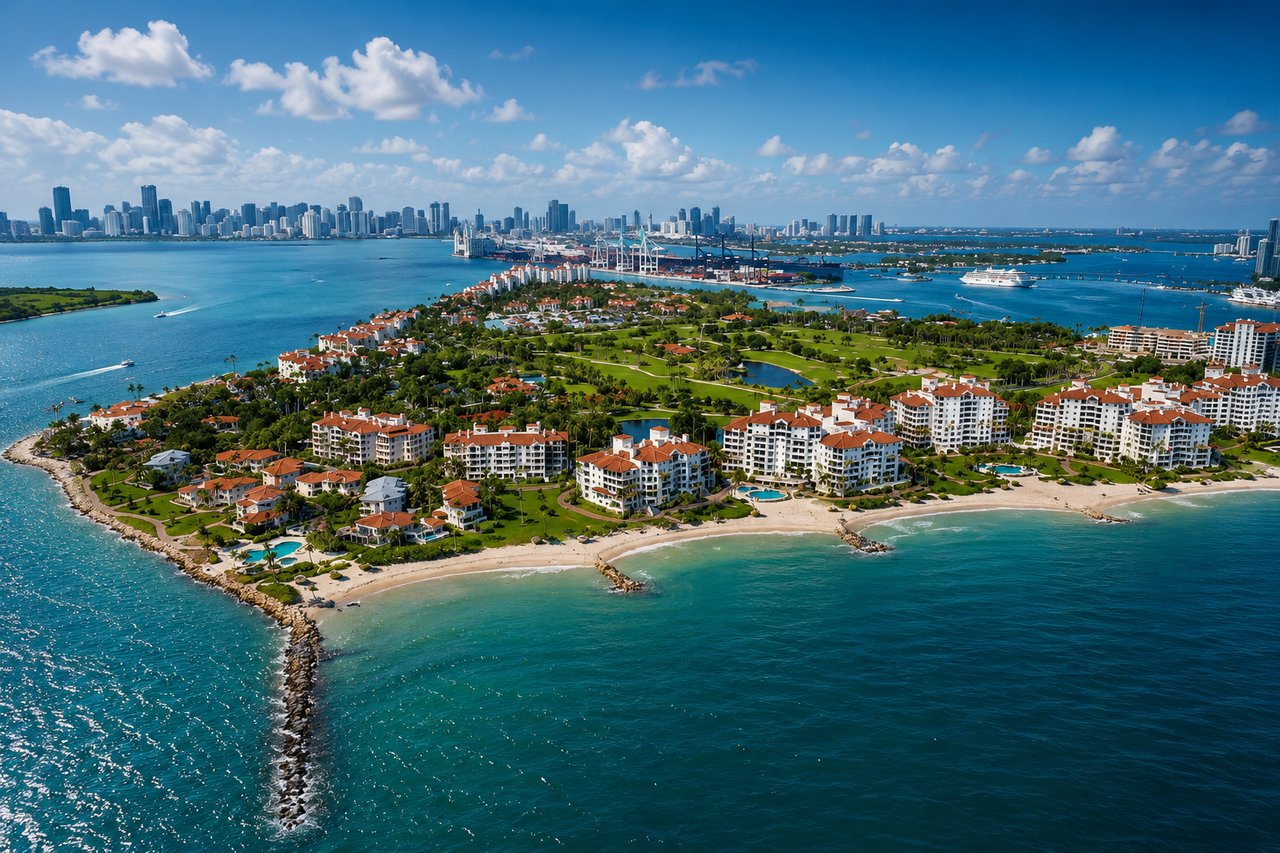




A unit at 7133 Fisher Island Drive listed for $18.3 million. It closed at $14.425 million. That's a 21.2 percent discount, or just under $4 million negotiated away at the closing table on one of the most exclusive addresses in the country.
That sale did not happen because the seller was desperate. Nothing on Fisher Island happens because anyone is desperate. It happened because the buyer understood something about this market that the headline numbers don't tell you: the median price and the price you'll actually pay have almost nothing to do with each other.
The Number Everyone Quotes
Fisher Island's ZIP code, 33109, took the title of most expensive ZIP code in the United States in 2025, unseating Atherton, California after eight straight years at number one. The median sale price came in around $9.5 million, a jump of roughly 65 percent year over year. It's the kind of statistic that gets repeated in every guide, every listing description, every conversation about the island.
It's also close to useless if you're the one signing a contract.
The Number Nobody Quotes
Since 2023, 88.4 percent of all closings on Fisher Island sold below the original asking price. The median seller gave back $800,000 from list to close. Days on market stretched from 77 in 2025 to more than 195 year-to-date in 2026. And while the median closing price climbed from $5.5 million in 2023 to $9.4 million year-to-date in 2026, price per square foot actually fell 9.6 percent over that same window.
Read those two paragraphs side by side and you get a market that is, on paper, on fire, and in practice, sitting cold.
What gets quoted | What actually closes |
|---|---|
Median sale price: roughly $9.5 million, #1 ZIP code nationally, early 2026 | 88.4% of closings since 2023 sold below asking price |
Median closing price rose from $5.5M (2023) to $9.4M (year-to-date 2026) | Price per square foot fell 9.6% over that same stretch |
Fisher Island tops national rankings for prestige and price | Median seller giveback since 2023: $800,000 |
— | Median days on market: 77 (2025) to 195+ (year-to-date 2026) |
Both columns are true at the same time. The question worth asking is why.
Why Owners Won't Sell
Fisher Island has roughly 774 residential parcels. Fewer than one in three of those owners claim the property as a homesteaded primary residence in Florida. More than half the island, 59 percent, is held through LLCs, trusts, or similar entities rather than by an individual on title. The median hold period runs 7.2 years, and nearly 20 percent of properties haven't changed hands in over two decades.
That's not a coincidence of taste. Florida's Save Our Homes provision caps how much a property's taxable assessed value can increase each year, so long as the owner keeps holding. Sell, and the new owner's tax basis resets to current market value, often at a dramatically higher number. For an owner who bought decades ago at a fraction of today's price, selling doesn't just mean giving up the property. It means giving up a tax position that took decades to build.
Add the fact that many owners are relocating from high-tax states, primarily New York, with New Jersey and Massachusetts close behind, and you get a population that moved to Florida specifically to stop paying income tax and is now sitting on real estate they have every financial incentive to hold indefinitely.
Put those two mechanisms together and you get an island where most owners simply aren't selling, regardless of what the median price does. The ones who do list are often trusts settling an estate, corporate entities restructuring, or genuine lifestyle changes rather than owners chasing a peak.
Where the $9.5 Million Actually Comes From
If most owners aren't selling, where does a rising median come from?
Two places. First, a handful of high-end transactions in buildings like the Palazzo carry outsized weight in a market this thin. When total annual closings can be counted on two hands, one $30 million sale moves the median more than it would in a market with thousands of transactions.
Second, new construction. Six Fisher Island, the last ground-up condominium project the island will ever see given its complete build-out, topped out in March 2026 and is targeting delivery later this year. Related Group, Teddy Sagi, BH Group, and Wanxiang America RE Group are behind the project, which spans 50 residences priced from $15 million to more than $90 million for the penthouse. Every unit that trades in that building enters the data at a price point far above the island's resale stock, pulling the average upward without reflecting anything about what a typical existing condo is worth.
The active listing count tells the same story from the supply side. As of June 2026, there were just 5 active listings on the entire island, down from 7 the month before. A market that thin doesn't need broad-based appreciation to post a dramatic median. It needs one or two outlier closings to land in the right window.
What This Means If You're Buying
Patience is leverage here in a way it isn't in most Miami submarkets. A seller who has held for 7 years, isn't facing a tax reset benefit from moving, and doesn't need the proceeds to buy the next house has no reason to negotiate against a lowball offer just because the calendar is turning. But once you find a seller who is genuinely motivated, whether from an estate settlement, a corporate restructuring, or a real life change, the data says you're negotiating from real strength. Nearly 9 in 10 closings since 2023 have landed below ask. Building that expectation into your opening offer, rather than anchoring to the $9.5 million median, is the difference between a fair deal and an overpay.
It also means the timeline matters. A median days-on-market north of 190 isn't a red flag that something is wrong with a listing. On Fisher Island, it may be the normal pace of a market where the seller is in no hurry and the buyer pool is small enough that finding the right match takes time.
What This Means If You're Selling
The instinct to price against the $9.5 million headline is understandable and usually wrong. That figure reflects a handful of trophy transactions and new construction pricing, not the comparable set your unit will actually be judged against. A tighter, building-specific and line-specific comp set, built from what has closed in the past 12 to 24 months rather than what the island-wide median suggests, will hold up far better against buyer scrutiny and appraisal.
It's also worth being upfront early about anything a sophisticated buyer will find anyway: recent or pending special assessments, the building's reserve position, and how you plan to handle the Fisher Island Club's initiation obligation in the deal structure. Club membership, historically requiring an equity contribution along with annual dues, is often negotiated as a closing credit rather than a separate line item. Being clear about that structure from the start avoids a renegotiation three weeks before closing, which on an island where deals already take six months, nobody wants.
Interior Design & Luxury Living on Fisher Island
Owning a luxury residence on Fisher Island is only the beginning. The right interior design can transform an exceptional property into a home that reflects its architecture, waterfront setting, and the lifestyle of its owner.
For homeowners looking to renovate, furnish, or personalize their Fisher Island residence, Tatem Interiors provides professional interior design services tailored to luxury homes and condominiums.
A Few Questions Worth Asking Before You Go Further
Is the Fisher Island Club membership included in the purchase price? No. Club membership is a separate obligation from the real estate transaction itself, tied to the club's own equity and dues structure. It's commonly negotiated as a closing credit within the purchase contract, but it doesn't disappear into the sale price automatically.
Why do so many Fisher Island owners hold title through an LLC or trust? Beyond the privacy benefits common in luxury real estate, Florida's Save Our Homes assessment cap and the state's lack of personal income tax make long-term holding structures financially attractive, particularly for owners who relocated from higher-tax states and have no urgency to sell.
Does a rising median mean now is a bad time to buy? Not necessarily. The median reflects a thin sample skewed by trophy sales and new construction pricing. The transaction-level data, steep average discounts and long days on market, suggests real negotiating room still exists for buyers willing to do the work on comps rather than react to the headline number.
Where This Leaves You
A market this small doesn't behave like a market at all in the conventional sense. It behaves like a small number of highly specific decisions made by people with very particular incentives, some of which have nothing to do with real estate and everything to do with a tax bill they'd rather not reset. Understanding that is worth more than any median price you'll see quoted, whether you're trying to buy in or trying to time an exit.
If you're weighing a move onto Fisher Island, or trying to figure out what your own unit is actually worth against real comparables rather than a headline number, Max Mlekus has spent decades working the Miami Beach luxury market and understands how these structural quirks play out at the closing table. Let's Connect.